
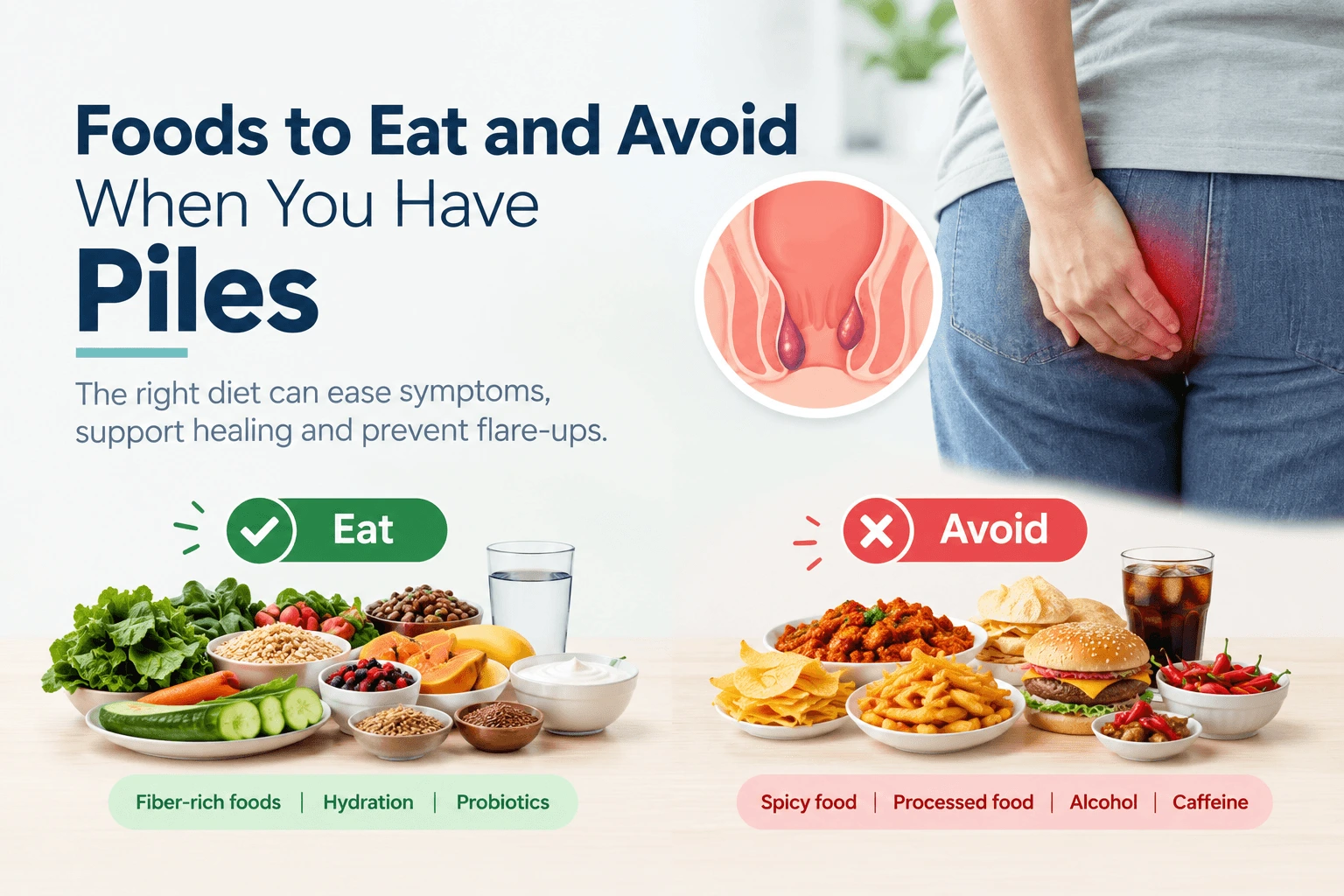
Foods to Eat and Avoid When You Have Piles
Piles, also known as haemorrhoids, are swollen blood vessels in and around the anus and lower rectum. They may cause symptoms such as pain, itching, swelling, discomfort while passing stool and bleeding during bowel movements.
Diet plays an important role in managing piles, particularly when constipation and straining contribute to the symptoms. Eating fibre-rich foods and drinking enough water can help soften stools and make bowel movements easier. On the other hand, a diet low in fibre may contribute to constipation and aggravate discomfort.
Understanding which foods to eat and which dietary habits to limit can help support bowel health and reduce straining. However, diet alone may not resolve every case of piles, and persistent symptoms require medical evaluation.
How Does Diet Affect Piles?
When stools are hard or difficult to pass, a person may strain during bowel movements. Repeated straining can increase pressure in the veins around the anus and may worsen existing haemorrhoid symptoms.
A balanced diet containing adequate fibre helps add bulk to stools and retain water, making them easier to pass. Adequate fluid intake also supports normal bowel function.
Dietary changes are therefore an important part of managing constipation-related symptoms and supporting recovery, alongside other measures recommended by a healthcare professional.
Best Foods to Eat When You Have Piles
1. Fibre-Rich Fruits
Fruits provide dietary fibre, water and essential nutrients that support digestive health.
Good options include:
- Papaya
- Pears
- Apples with the skin
- Oranges
- Guava
- Prunes
Whole fruits are generally preferable to fruit juices because they retain more of their natural fibre. Increase fibre intake gradually to reduce the likelihood of gas and bloating.
2. Green Leafy Vegetables
Vegetables are valuable sources of fibre and can be included in everyday meals.
Consider adding:
- Spinach
- Fenugreek leaves
- Amaranth leaves
- Broccoli
- Green peas
- Carrots
A combination of cooked vegetables and fresh produce can help increase overall fibre intake. Choose preparations that suit your digestion and personal tolerance.
3. Whole Grains
Replacing some refined grains with whole grains can help improve daily fibre intake.
Useful options include:
- Whole-wheat roti
- Oats
- Brown rice
- Whole-grain bread
- Barley
- Millet-based foods such as jowar and bajra
Whole grains can be incorporated into regular meals rather than relying on a single high-fibre food.
4. Pulses, Beans and Lentils
Legumes provide fibre and plant-based protein, making them useful additions to a balanced diet.
Examples include:
- Moong dal
- Masoor dal
- Chickpeas
- Rajma
- Black-eyed peas
- Other beans and lentils
If these foods cause bloating, begin with smaller portions and increase intake gradually. Soaking and cooking legumes thoroughly may also improve tolerance.
5. Nuts and Seeds
Nuts and seeds contain fibre and healthy fats.
Options include almonds, walnuts, chia seeds and ground flaxseeds. They can be added to breakfast, yoghurt or other meals in appropriate portions.
Increase fibre gradually and drink enough fluids, especially when adding concentrated fibre sources to your diet.
6. Water and Other Suitable Fluids
Adequate fluid intake helps fibre work effectively and can make stools easier to pass.
Drink water regularly throughout the day. Soups and other non-caffeinated fluids can also contribute to hydration.
Fluid requirements vary according to activity, climate and health conditions. People who have been advised to restrict fluids because of a medical condition should follow their healthcare professional’s advice.
Foods and Dietary Habits to Limit When You Have Piles
There is no single list of foods that every person with piles must avoid. The main dietary goal is to prevent constipation and avoid habits that make bowel movements difficult.
1. Excessive Refined and Low-Fibre Foods
A diet dominated by refined foods may provide insufficient fibre.
Examples include:
- White bread
- Refined-flour biscuits
- Pastries
- Cakes
- Many packaged snack foods
These foods do not necessarily cause piles directly. However, relying on them instead of fibre-rich foods may contribute to constipation.
2. Excessive Fast Food and Fried Foods
Frequent consumption of fried foods and fast food can make it harder to maintain a balanced, fibre-rich diet.
Instead of eliminating all such foods, focus on including vegetables, whole grains, fruits and pulses in your regular meals.
3. Excessive Alcohol
Alcohol can affect hydration and may displace healthier food choices. Limiting alcohol can support overall health and hydration.
Alcohol is not a direct cause of every case of piles, but maintaining adequate fluid intake is important when managing constipation.
4. Too Much Caffeine, If It Affects You
Coffee, tea and other caffeinated drinks affect people differently. Moderate consumption does not necessarily worsen piles, but excessive intake may be unsuitable for some individuals.
If a particular drink causes digestive discomfort or interferes with your hydration habits, consider reducing it and drinking water regularly.
5. Foods That Trigger Individual Digestive Symptoms
Some people experience bloating or discomfort after particular foods, including very spicy preparations. However, spicy foods are not established as a direct cause of haemorrhoids.
You do not need to eliminate chilli or other spices unless they aggravate your symptoms or cause personal discomfort.
A Simple Indian Diet Plan for Piles
A practical approach is to include fibre-rich foods across the day while maintaining adequate hydration.
| Meal | Suggested options |
| Early morning | Water, if suitable for you |
| Breakfast | Oats with fruit, or vegetable poha with added vegetables |
| Mid-morning | Guava, pear or another whole fruit |
| Lunch | Whole-wheat roti or brown rice, dal and cooked vegetables |
| Evening snack | A small portion of nuts or roasted chickpeas |
| Dinner | Vegetable khichdi with added vegetables, or roti with dal and sabzi |
This is a general example, not an individualised medical diet. Adjust portions and food choices according to your nutritional needs, food tolerance and other medical conditions.
Other Habits That May Help Manage Piles
Diet is important, but everyday bowel habits also matter.
- Avoid straining: Try not to push excessively while passing stool.
- Do not delay bowel movements: Respond to the urge to use the toilet.
- Avoid sitting on the toilet for prolonged periods: Spending unnecessary time on the toilet may increase pressure in the anal region.
- Stay physically active: Regular movement, such as walking, can support bowel regularity.
- Consider fibre supplements when appropriate: Psyllium or other fibre supplements may help some people, but use them according to product instructions and professional advice where needed.
If constipation persists despite dietary changes, consult a healthcare professional to determine whether additional treatment is necessary.
When Should You Consult a Doctor for Piles?
Dietary changes may help with mild symptoms, but they are not a substitute for medical evaluation when symptoms persist or worsen.
Consult a healthcare professional if you experience:
- Repeated bleeding during bowel movements.
- Persistent pain, itching or swelling around the anus.
- A lump that becomes increasingly painful.
- Symptoms that do not improve with home care.
- Recurrent constipation or difficulty passing stools.
Rectal bleeding should not automatically be assumed to be caused by piles. Other conditions can produce similar symptoms and may require different treatment.
Seek urgent medical attention for heavy or continuous bleeding, severe anal pain, or bleeding accompanied by dizziness or faintness.
Medical disclaimer: This article is intended for general educational purposes and does not replace individual medical consultation, diagnosis or treatment.
Conclusion
Choosing the right foods can help manage piles by improving bowel regularity and reducing straining. Include fruits, vegetables, whole grains, pulses and adequate fluids in your daily routine, while limiting dietary habits that leave you with insufficient fibre.
Remember that dietary changes support symptom management but do not guarantee that piles will resolve. Persistent rectal bleeding, pain or swelling should be evaluated by a healthcare professional.
Contact Information
2nd Floor, Swara Emerald, Dr R.P. Rd, Tilak Nagar, Dombivli East, Dombivli, Maharashtra 421201
+91 9403890477
Schedule Your Consultation Today – Because your health matters, and expert care is just a call away.
Frequently Asked Questions
Which fruit is best for piles?
Fruits such as pears, guava, apples with the skin and prunes provide fibre that can help support regular bowel movements. No single fruit is a cure for piles; variety and adequate overall fibre intake are more important.
Can I eat rice if I have piles?
Yes. Rice can be part of a balanced diet. Brown rice generally contains more fibre than white rice, so including whole grains alongside vegetables, fruits and pulses may help improve fibre intake.
Is curd good for piles?
Plain curd can be included if you tolerate dairy products. It provides protein and calcium, but it is not a direct treatment for haemorrhoids. Pair it with fibre-rich foods for a more balanced meal.
Should I stop eating spicy food if I have piles?
Not necessarily. Spicy food does not directly cause piles, but it may aggravate discomfort in some people. Reduce it if you notice a clear connection with your symptoms.
How much fibre should I eat daily?
Many adults need approximately 22–34 grams of fibre per day, depending on age and sex. Increase intake gradually and drink adequate fluids to help minimise bloating and constipation.




No Comments
Sorry, the comment form is closed at this time.